Most people describe the same sequence. There was a bang, often loud enough to be heard inside the house and often when nobody was operating the door. Afterwards the door either refused to move at all, or the opener ran, strained and reversed. Lifting the door by hand felt impossible or dangerously heavy.
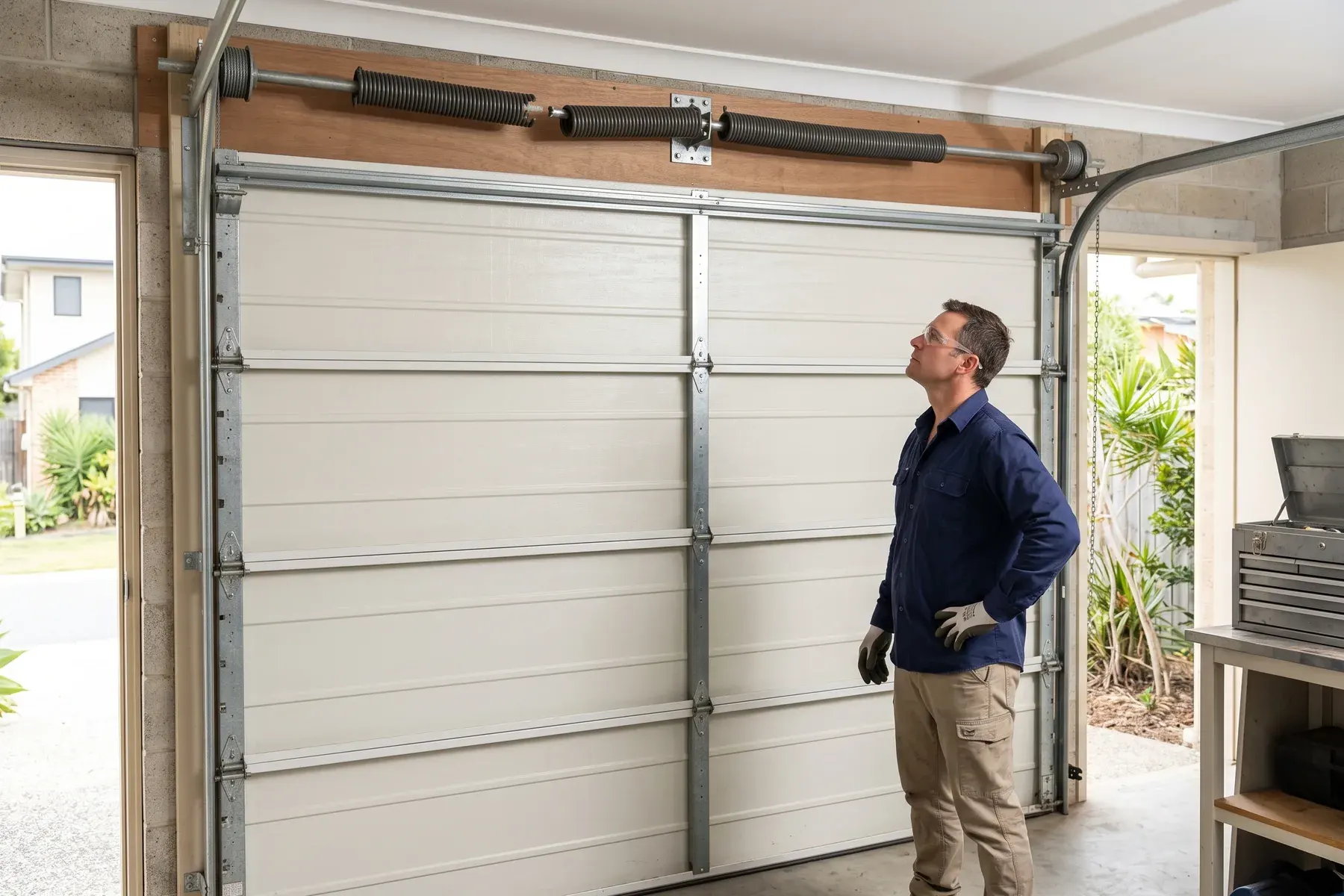
That sequence is characteristic because a garage door spring does not fail gradually in a way you notice. It stores a large amount of energy across thousands of cycles, and when the steel finally fatigues it releases that energy at once. The gap you can sometimes see in a coiled torsion spring above the door is the physical evidence.
The important consequence is that the door is now unbalanced. Everything that made the door feel manageable — the opener, the manual release, lifting it by hand — was relying on the spring doing most of the work.